How to Start Rock Climbing as a Beginner
Rock climbing is one of those adventures that looks deceptively simple from the ground. Standing at the base of a crag in Snowdonia, it’s easy to feel both excited and intimidated. As someone who has spent years guiding climbers across North Wales, I know that the key to a successful start isn’t just strength or daring — it’s understanding the fundamentals, having the right equipment, and building confidence gradually.
Before you even think about stepping onto the rock, it’s worth familiarising yourself with the different styles of climbing. Bouldering involves short, powerful climbs, often no more than five metres high, and are tackled without ropes. This is perfect for developing technique and strength, and North Wales has fantastic beginner bouldering spots, such as and the the RAC boulders and Llanberis Pass Roadside. Top-rope climbing, on the other hand, uses a rope anchored at the top of a route, giving a safe environment for newcomers to experiment with movement and climbing technique. Sport climbing, with pre-placed bolts along the route, offers a slightly more advanced step, while traditional climbing requires placing your own protection as you go. For beginners, I usually recommend starting with bouldering or top-rope climbing before progressing to sport or trad climbing.
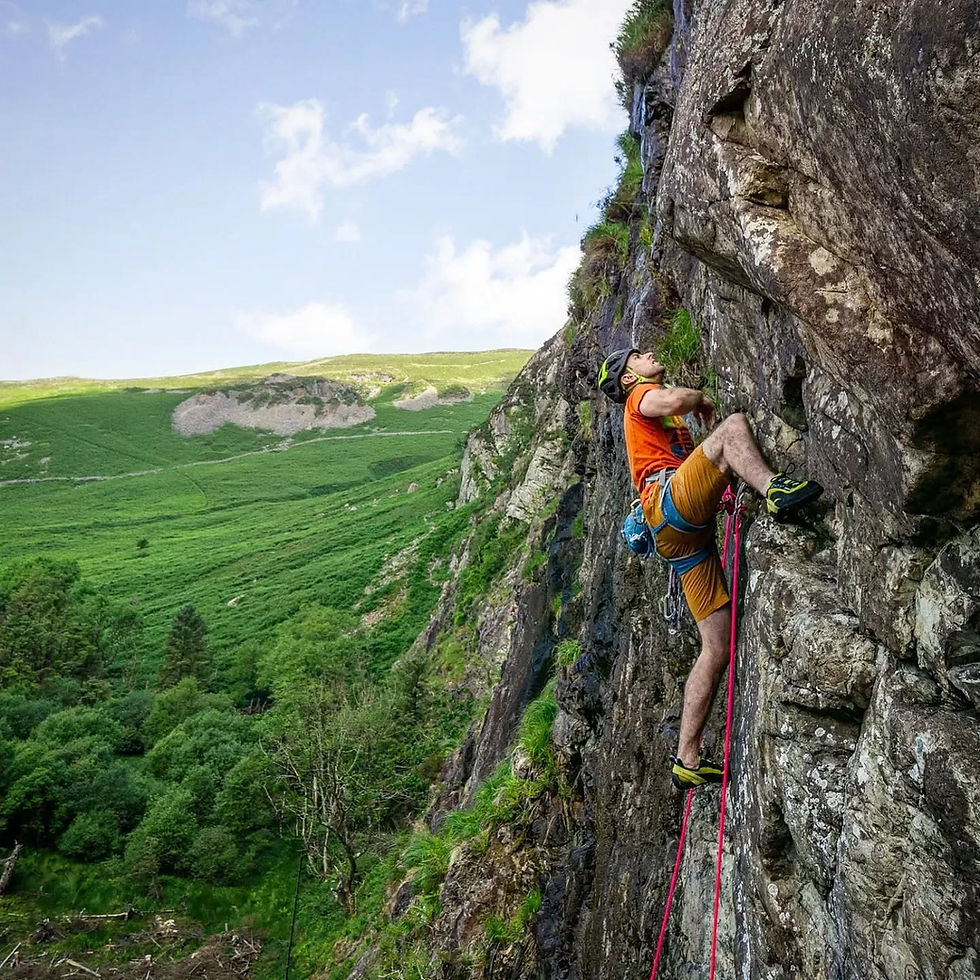
No matter which style you choose, having the right gear is crucial. For any type of roped climbing, a well-fitting harness, climbing shoes, helmet, and chalk bag form the core of your kit. Your harness should sit snugly around your waist and legs, distributing weight comfortably during climbs. Climbing shoes are all about precision: they should fit snugly to allow confident foot placement, but not so tight that your feet hurt after a few climbs. Helmets protect against falling rocks and bumps on the crag — I'd say they’re non-negotiable outdoors. A belay device and locking carabiner are equally essential; together, they allow you or your partner to manage the rope safely. Chalk bags may feel optional at first, but keeping your hands dry can make a real difference in grip.
Alongside the equipment, basic ropework skills are fundamental. Learning how to tie in using a rethreaded figure-8 knot, for example, gives you a secure connection to the rope. Proper belaying is another essential skill — it’s not just holding the rope, it’s about constantly monitoring your climber, managing slack, and being ready to arrest a fall. Understanding how to attach to anchors and inspect them for safety is critical when climbing outdoors. Even removing gear, which might seem straightforward, requires thought and technique to maintain control of the rope and ensure that nothing is left behind or unsafe.
Equally important is choosing the right location to practice. North Wales offers some of the UK’s most accessible and beautiful beginner-friendly climbing areas. Places like Tryfan Fach, Milestone Buttress and Tremadog provide excellent venues for learning the fundamentals.
Beyond the mechanics of climbing, there are some key lessons I stress with all beginners. Footwork is everything — your legs should do the majority of the work, while your hands serve to balance and stabilise. Climb with a partner or guide who can support and encourage you, and always take the time to practice knots and belaying on the ground to build muscle memory. Progress should be gradual: climbing is as much about developing confidence and understanding your body as it is about summiting a route. And above all, enjoy the process. Each climb, each route, is an opportunity to learn and to appreciate the mountains around you.
Taking a beginner course accelerates this learning while minimising risk. On our courses in Snowdonia and North Wales, participants gain hands-on experience in belaying, knot-tying, safe movement, route reading, and basic problem-solving on rock. By the end of a few coaching sessions, most climbers are ready to tackle beginner routes independently, equipped with the confidence and skills to explore safely. Starting with expert guidance also sets you up for a smoother progression into more advanced climbing, whether that’s multi-pitch routes, sport climbing, or traditional climbs.
Rock climbing is ultimately about discovery — of routes, of your abilities, and of the incredible landscapes. By combining the right equipment, basic ropework, safe practices, and guidance from experienced instructors, beginners can quickly move from apprehension at the base of a crag to confident movement on the rock. The mountains and sea cliffs of Snowdonia are waiting, and with a little preparation and guidance, your climbing adventure can begin safely, enjoyably, and with lasting memories.


Comments