The Different Types of Climbing Explained: Find Your Style
One of the most exciting things about climbing is how varied it can be. From short, powerful boulder problems to long, exposed mountain routes, every style offers something unique — a different challenge, mindset, and reward. If you’re new to climbing, the range of options can seem overwhelming at first. But once you understand how each type of climbing works — and what it demands from you — you can start to choose the style that best matches your goals and personality.
As a guide and instructor in North Wales, I often help people discover which form of climbing suits them best. Some find joy in the physicality of bouldering, others love the endurance and technical precision of sport climbing, while many are drawn to the adventure and self-reliance of traditional routes high in the mountains. Let’s break down the main types of climbing and explore what makes each one special.
Bouldering – Strength, Movement, and Problem Solving
Bouldering is climbing stripped down to its purest form. There are no ropes or harnesses — just you, the rock, and a crash pad for safety. Climbs, or “problems,” tend to be short (usually under five metres) but can be extremely technical or powerful. It’s an ideal introduction to climbing because it focuses on movement, body positioning, and balance, without the distraction of ropework or complex systems.
Bouldering has exploded in popularity thanks to indoor climbing walls, but the outdoor experience is something else entirely. In North Wales, areas like the Llanberis Pass, Ogwen Valley, and the coastal crags around Porth Ysgo are world-class venues. You’ll find everything from beginner-friendly slabs to steep overhangs that challenge even seasoned climbers.
Because it’s low-commitment and easy to access, bouldering is perfect for short sessions, strength training, or refining technique. It’s also incredibly social — groups of climbers often share pads, spot each other, and trade beta (tips on how to complete the problem).
Top-Rope Climbing – Learning the Ropes Safely
Top-rope climbing is where most people truly begin their climbing journey. The rope runs from your harness, up to an anchor at the top of the route, and back down to your belayer on the ground. This system ensures that if you slip, you’ll only fall a short distance.
Top-roping is a fantastic way to build confidence, practice technique, and learn rope skills in a safe environment. It’s often the first outdoor experience for many beginners and the foundation of most climbing courses.
In North Wales, there are countless venues perfect for top-roping — from the accessible slabs at Lion Rock near Llanberis to more adventurous settings in the Moelwyns or Tremadog. Because you’re safely attached at all times, it’s an excellent format for learning movement on real rock, developing trust in your gear, and practising communication with a partner.
Sport Climbing – Pushing
Physical Limits
Sport climbing takes things a step further. Routes are protected by pre-placed bolts drilled into the rock, and climbers clip their rope into quickdraws as they ascend. Unlike top-roping, you’re leading the climb — meaning you place the rope as you go, which adds a thrilling mental challenge.
Because the protection is fixed and generally very reliable, sport climbing encourages physical progression and technical mastery. You can safely push your limits, take falls, and work routes repeatedly to improve. It’s all about efficiency, endurance, and problem-solving under pressure.
North Wales boasts some of the UK’s best sport climbing venues — from the limestone cliffs of Pen Trwyn near Llandudno to the slate quarries above Llanberis, where climbers can test their balance, trust, and composure on beautifully technical routes. For those looking to bridge the gap between indoor climbing and outdoor adventure, sport climbing is the perfect next step.
Traditional (Trad) Climbing – Adventure and Self-Reliance
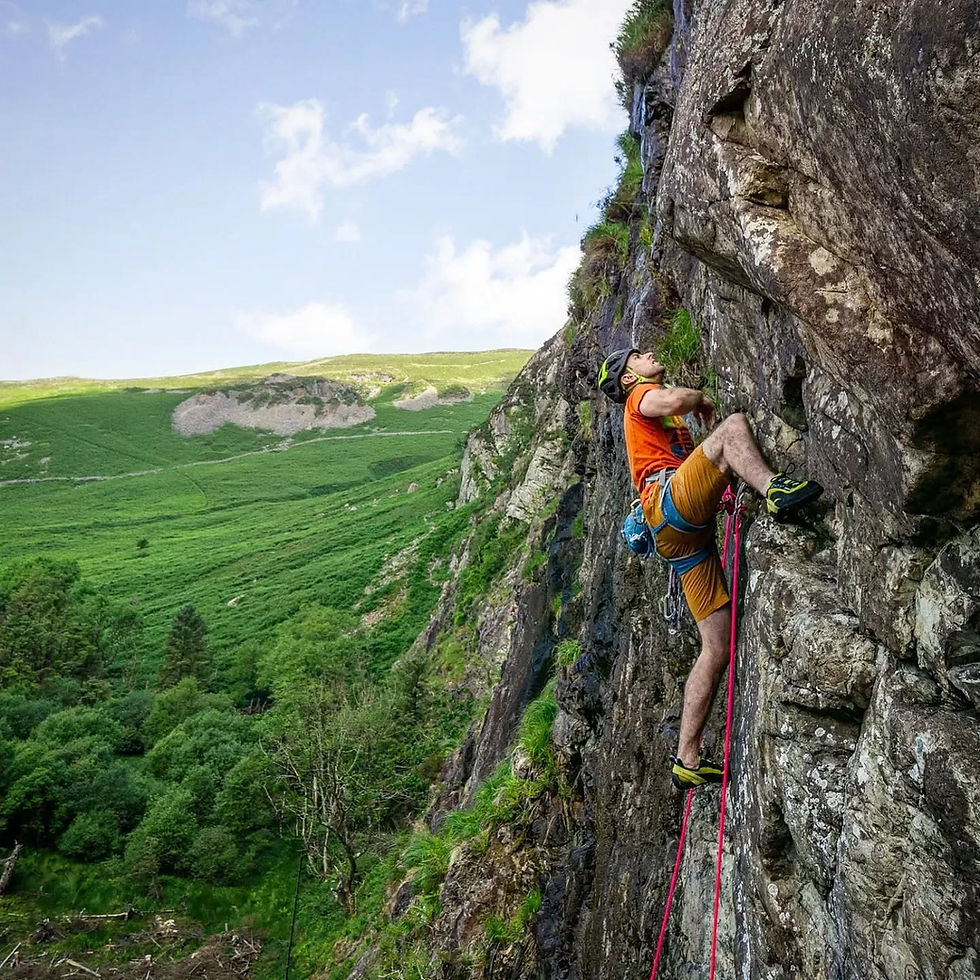
Traditional climbing, or “trad,” is the original and arguably purest form of roped climbing. Instead of clipping into bolts, you place your own protection (known as “gear”) into cracks and features in the rock as you climb. This gear — usually a mix of nuts, cams, and slings — is removable, leaving the rock unscarred.
Trad climbing requires a combination of technical knowledge, judgment, and composure. You must constantly assess the rock, choose solid placements, and manage the rope as you move. It’s as much a mental game as it is physical.
Few places in the world rival North Wales for trad climbing. The crags of Tremadog, Ogwen Valley, and the Llanberis Pass are steeped in history and tradition. Routes like Cneifion Arete, Grooved Arete, and Christmas Curry have been shaping British climbing culture for decades. Guiding clients up these climbs is always a privilege — it’s an experience that combines adventure, skill, and connection to the landscape.
Multi-Pitch Climbing – The Bigger Picture
Multi-pitch climbing builds on trad or sport techniques but takes you higher — often hundreds of metres off the ground. Climbs are divided into several “pitches,” each with its own belay stance. It’s the style of climbing most associated with big mountain routes and long days on the rock.
Multi-pitch climbs teach efficiency, communication, and trust. Climbers must work as a team, manage rope systems carefully, and stay calm under exposure. In North Wales, classic routes like Clogwyn y Grochan, Idwal Slabs, or Tryfan’s East Face are perfect training grounds for this type of adventure.
It’s a style that rewards patience and planning, but the payoff — topping out on a mountain ridge with sweeping views of Snowdonia — is truly unforgettable.
Indoor Climbing – The Perfect Training Ground
While nothing matches the beauty of outdoor climbing, indoor climbing walls provide an excellent year-round way to train and learn. They offer structured routes, predictable conditions, and the opportunity to practice technique and fitness before heading outdoors.
Many new climbers start indoors before transitioning to rock. Indoor centres in North Wales, such as The Beacon Climbing Centre in Caernarfon or Indy Climbing Wall on Anglesey, offer everything from bouldering circuits to roped walls and auto-belays.
For those keen to move outdoors, an instructional session or “gym to crag” course bridges the gap safely — teaching rope management, anchor building, and environmental awareness.
Which Type of Climbing Is Right for You?
Ultimately, the “best” type of climbing depends on your goals and personality. If you love problem-solving and dynamic movement, bouldering might be your calling. If you enjoy structure and progression, sport climbing offers clear goals and measurable improvement. For those drawn to adventure, self-reliance, and the mountains themselves, trad and multi-pitch climbing deliver an unmatched sense of freedom.
Whatever path you choose, each style teaches valuable lessons that carry over into the others. The important thing is to learn safely, develop good habits early, and enjoy the journey.
At How to Climb, we offer guiding and instruction across all these disciplines — from first indoor sessions to advanced trad and multi-pitch adventures in the heart of Snowdonia. If you’re ready to explore the world of climbing, we can help you find your footing and your style.

Top Roping


Comments